
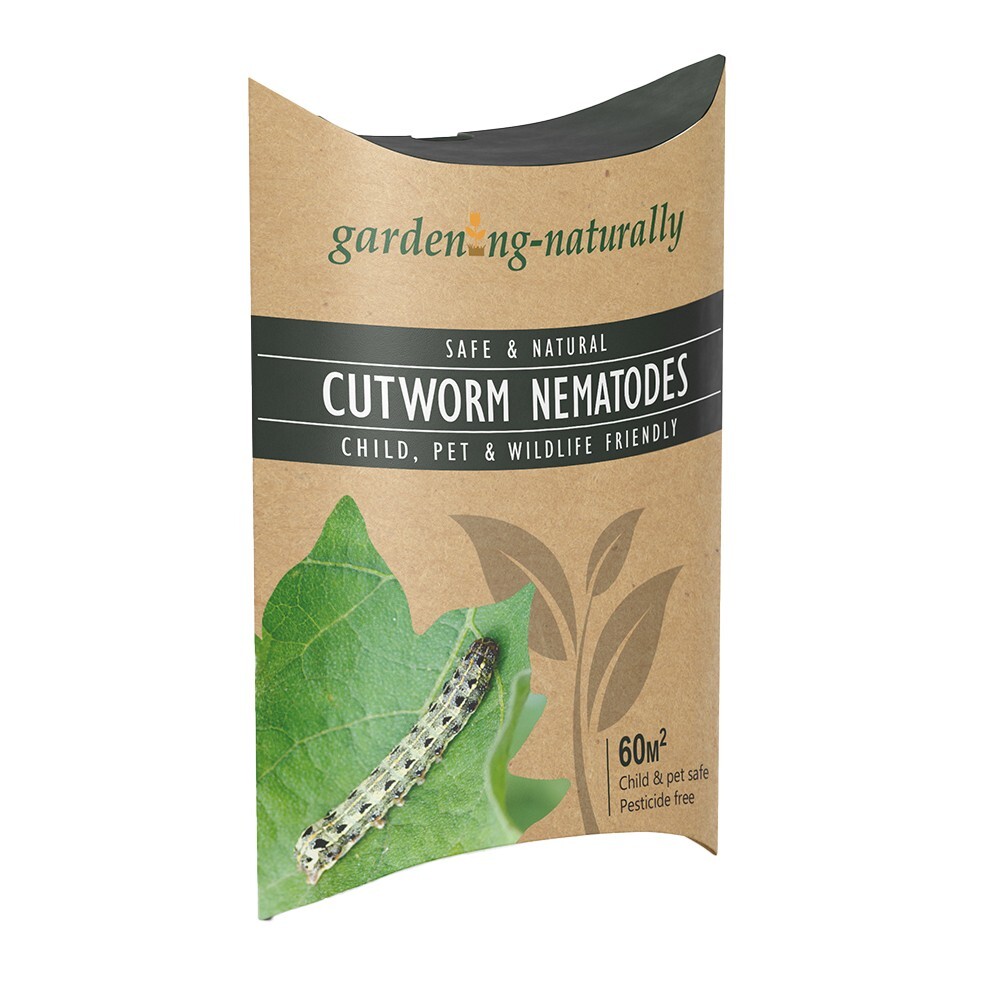
Cutworm Nematodes - Organic Pest Control Solution for 2 x 30sq.m Garden Coverage
Gardening Naturally
Cutworm nematodes stop cutworms which typically attack in spring and autumn, targeting plant stems at soil level. This pest is known to destroy vegetables like lettuce, carrots, and cabbage, along with young ornamental plants and herbs. Nematode type: Steinernema Mix (feltiae/carpocapsae). Cutworms can damage a wide range of plants, particularly in early growth stages. This includes: Lettuce, cabbage, broccoli, tomatoes, beans, peas, carrots, sweetcorn Marigolds, petunias, dahlias Herbs and small fruit plants When to Apply Cutworm Nematodes Apply in early spring (March to May) to protect young plants, and again in late Summer to Autumn (August to October) to target new cutworm generations. Use at planting time for immediate protection. Identifying Cutworm Activity in the Garden Cutworms are known for their nocturnal activity, emerging from the soil at night to feast on plants, particularly targeting stems and cutting down the plant hence the name. Cutworms vary in colour, appearing as brown, yellow, or green soft-bodied caterpillars, typically around 1" in length with distinct stripes along their bodies. Signs of Cutworm Damage Look for stems of annual plants being girdled or severed at ground level. Cutworms also feed above ground at night, especially on the leaves of low-growing herbaceous plants. How to Apply Cutworm Nematodes Cutworm nematodes are applied directly to moist soil using a standard watering can or hose-end sprayer. They’re safe to use around pets, wildlife, and pollinators.If using over plants, water them within 30 minutes of application to wash the nematodes off the leaves and back onto the soil. Storage Instructions for Nematodes Store nematodes in the fridge or below 5 degrees.This is a live product with an expiry date of around two weeks and is non returnable. Ensure to use the whole pack before the expiry date Recommended Nematode Applicators Nematode applicator or watering cans are available Frequently Asked Questions Cutworm Nematodes What are cutworm nematodes and how do they help control cutworms? Cutworm nematodes are microscopic organisms (Steinernema feltiae and carpocapsae) that seek out and destroy cutworm larvae in the soil. They help protect young plants by reducing pest populations before cutworms emerge to feed. When is the best time to apply cutworm nematodes? Apply nematodes in early spring from March to May to target the first generation of cutworms. Reapply in late summer to autumn (August to October) to manage later infestations. How do cutworms damage vegetable and garden plants? Cutworms attack plant stems at or just below the soil surface, often cutting them completely. They also feed on leaves at night, affecting vegetables, herbs, and ornamentals during their early growth stages. Which plants are most at risk from cutworms? Cutworms commonly affect lettuce, cabbage, tomatoes, peas, carrots, broccoli, beans, sweetcorn, and herbs. They also target flowers such as marigolds, petunias, and dahlias. What do cutworm larvae look like and how can I identify them? Cutworm larvae are soft-bodied caterpillars around 1 inch long. They can be brown, green, or yellow with faint stripes and are most active at night. How do I apply cutworm nematodes in my garden? Mix the nematodes with water and apply to moist soil using a watering can or hose-end sprayer. If used over foliage, rinse the plants within 30 minutes to wash the nematodes into the soil. Are cutworm nematodes safe for pets, wildlife, and pollinators? Yes, cutworm nematodes are safe for use around pets, garden wildlife, and pollinating insects. They only target cutworm larvae in the soil and do not harm beneficial species. How should I store cutworm nematodes before application? Keep the nematodes refrigerated or store them below 5°C until use. Always follow the use-by date on the packaging for best results. Can I use cutworm nematodes at the time of planting? Yes, applying nematodes at the time of planting is recommended to protect seedlings and young plants from early damage caused by emerging cutworms. What are the signs of a cutworm infestation in my garden? Plants may appear wilted or severed at the base, especially in the morning. Low-growing herbs and annual flowers may also show signs of chewed leaves or damaged stems.
Compare prices (3 shops)
| shop | Price | Action |
|---|---|---|
| Gardening Naturally UK | 11,99 GBP | Go to shop |

|
13,99 GBP | Go to shop |

|
13,99 GBP | Go to shop |
Similar products
-

-

Gardening Naturally Ant Nematodes Treats 16 Nests
From 11,49 EUR -

-

-

-

Gardening Naturally Yellow House Fly Nematodes 12M²
From 11,99 EUR