
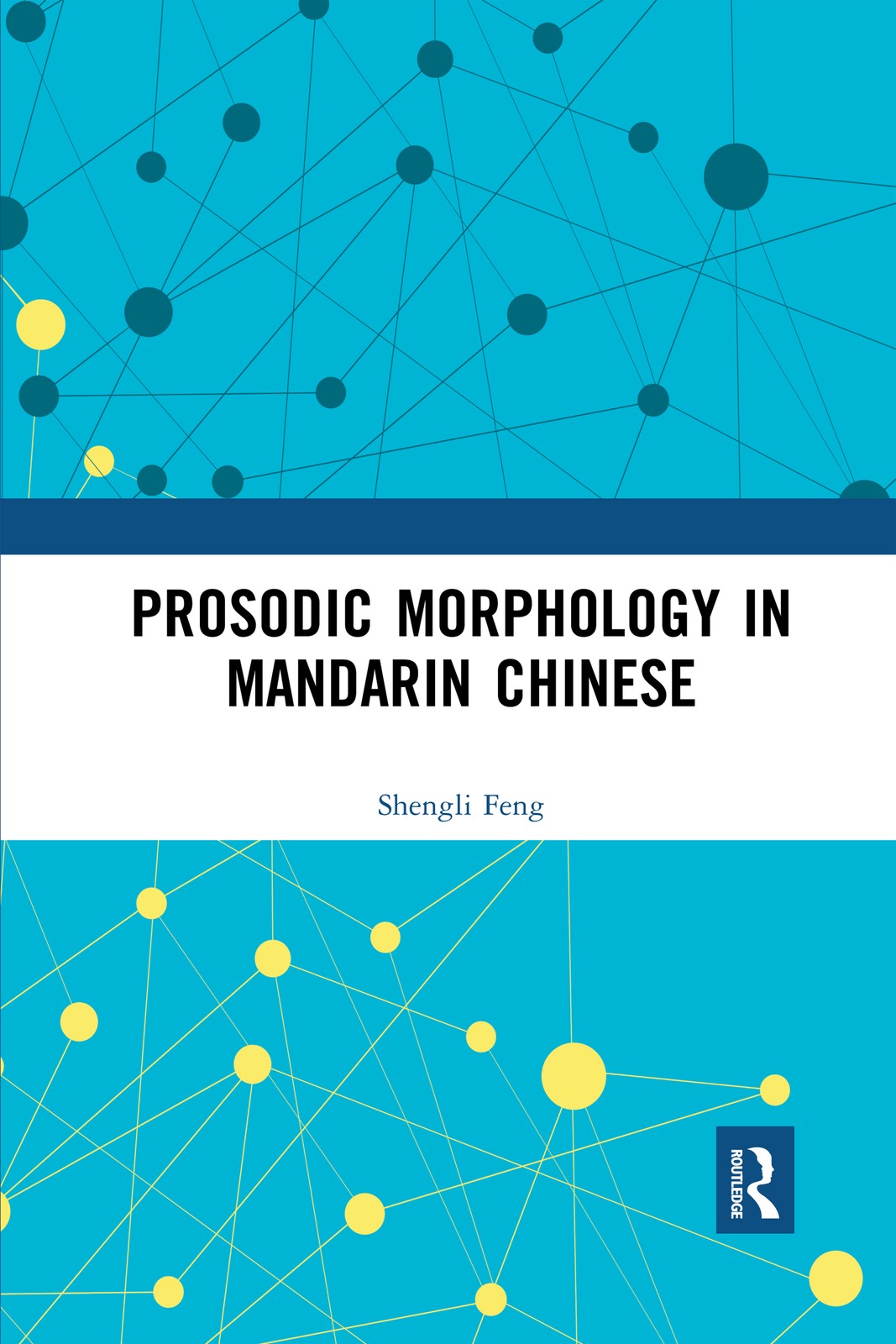
Prosodic Morphology in Mandarin Chinese
Taylor & Francis
It is not entirely clear if modern Chinese is a monosyllabic or disyllabic language. Although a disyllabic prosodic unit of some sort has long been considered by many to be at play in Chinese grammar, the intuition is not always rigidly fleshed out theoretically in the area of Chinese morphology. In this book, Shengli Feng applies the theoretical model of prosodic morphology to Chinese morphology to provide the theoretical clarity regarding how and why Mandarin Chinese words are structured in a particular way. All of the facts generated by the system of prosodic morphology in Chinese provide new perspectives for linguistic theory, as well as insights for teaching Chinese and studying of Chinese poetic prosody. \n >\n\n--Introduction. 2. Prosodic Word as an Origin of Compounds in Classical Chinese. 3. Monosyllabicity and Disyllabicity. 4. Prosodically Constrained Compound Formation. 5. Minimal and Maximal Word Effects. 6. Prosodic Register Grammar. 7. Compound Prosodic Word ---- Sis
Compare prices (4 shops)
| shop | Price | Action |
|---|---|---|

|
44,79 GBP | Go to shop |

|
45,43 GBP | Go to shop |
|
|
47,99 GBP | Go to shop |
|
|
49,51 GBP | Go to shop |
Similar products
-
-
-

Modern Mandarin Chinese The Routledge Co
From 98,13 EUR -
-
Rethinking Morphology
From 98,95 EUR -

Mandarin Chinese For Cambridge Igcse
From 36,28 EUR