

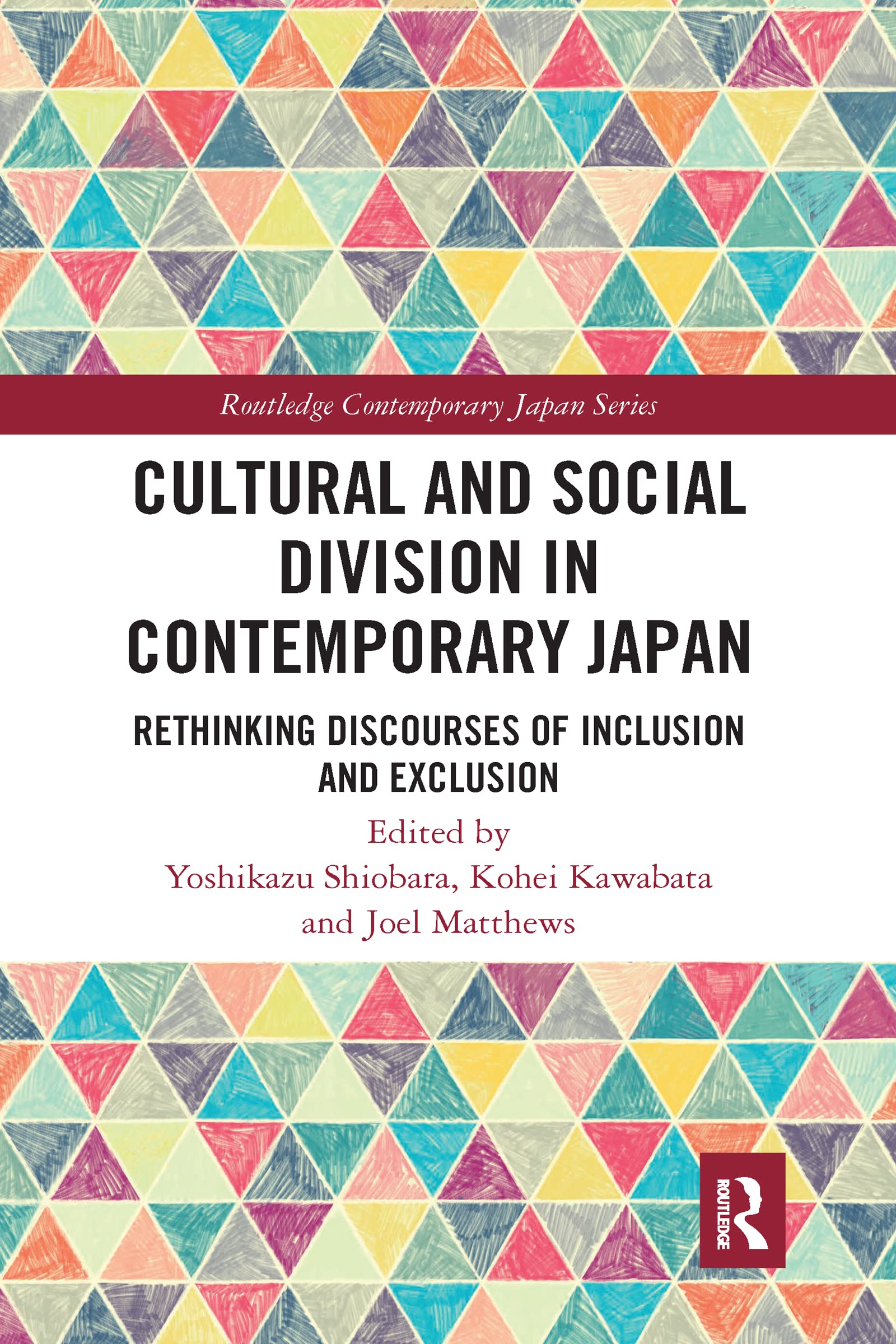
Cultural and Social Division in Contemporary Japan
Taylor & Francis
The recent manifestation of exclusionism in Japan has emerged at a time of intensified neoliberal economic policies, increased cross-border migration brought on by globalization, the elevated threat of global terrorism, heightened tensions between East Asian states over historical and territorial conflicts, and a backlash by Japanese conservatives over perceived historical apologism. The social and political environment for minorities in Japan has shifted drastically since the 1990s, yet many studies of Japan still tend to view Japan through the dominant discourses of \u201Cethnic homogeneity (tanitsu minzoku shakai)\u201D and \u201Cmiddle-class society (so\u00AFchuryu\u00AF-shakai)\u201D which positions the exclusion of minorities as an exceptional phenomenon. While exclusionism has been recognized as a serious threat to minority groups, it has not often been considered a representative issue for the whole of Japanese society. This tendency will persist until the discourses of tanit.
Compare prices (2 shops)
| shop | Price | Action |
|---|---|---|

|
133,40 GBP | Go to shop |
|
|
155,00 GBP | Go to shop |
Similar products
-
-
Social Stratification in Contemporary Japan
From 48,99 EUR -

Cultural Nationalism in Contemporary Japan
From 160,00 EUR -

Cultural Nationalism in Contemporary Japan
From 51,99 EUR -

-

Social Movements and Political Activism in Contemporary Japan
From 170,00 EUR